Behaviour Change
Overview
My behavioural science and behaviour change consultancy work about climate and environmental change and public health has involved understanding people’s:
…thoughts, emotions, attachments, feelings, perceptions, attitudes, values, beliefs, norms, motivations, self-efficacy, behavioural intentions and behaviours
and the psychological processes shaping how they think, talk about and respond to risks, threats, motivators, barriers, enablers, change incentives and calls for action. My interdisciplinary training has enabled me to analyse a policy’s, programme’s, project’s, plan’s, evaluation’s or research study’s goals to identify psychological, behavioural, health, social and cultural aspects, and where behaviour change is desirable or necessary. I then design an approach by weaving together theories, study designs, methods, communications and behaviour change techniques from various behavioural, social and health disciplines. I am a theory and evidence specialist who can simultaneously address psychological, behavioural, social, cultural, health and equalities aspects as a Behavioural and Social Designer of Behaviour Change Interventions and Functions. Every project presents a fresh opportunity to combine the most effective ingredients for addressing a specific problem, and learn and apply new possibilities. You can find my work on climate and environmental change, environmental psychology, urban development and behaviour change with clients Expertise France, IOM, and UNDP here
Projects and the Evolution of My Expertise
Behavioural Science has become associated with behavioural economics and other finance-oriented disciplines that predict how people make economic decisions. In social, environmental and health psychology and public health promotion, the ‘behavioural science’ trope is used to describe predictive theoretical models of how behaviour occurs, and what psychological, social, cultural, behavioural and structural processes and contextual factors influence it.

Expertise France
EU Green Economic Recovery Facility
to assist
The Government of
Sri Lanka
The Government of France’s International Co-operation and Development Agency.
Its HQ is in Paris.
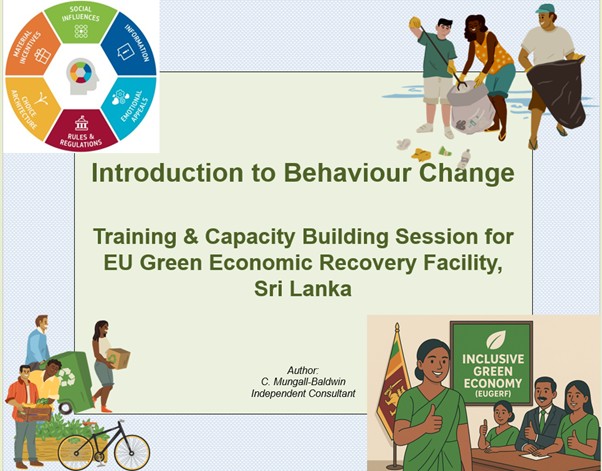
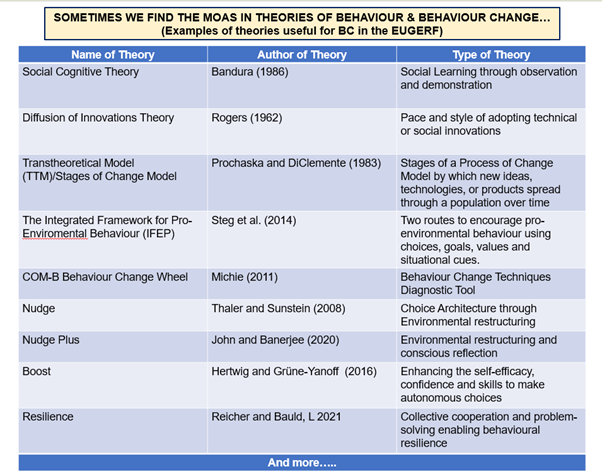
For my consultancy with Expertise France as Behaviour Science Expert on the EU-funded Green Economic Recovery Facility in Sri Lanka, I developed a behavioural process model of the macro-meso-micro level influences on social group and individual behaviour in the local context when people are faced with incentives to adopt pro-environmental and sustainability-oriented thinking and behaviours. This included the enablers to behaviour change, such as mechanisms of action (MOAs) taken from the Behaviour Change Intervention Ontology (BCIO) developed by researchers at University College London (UCL), and also barriers to action. I used the popular COM-B model also developed at UCL, components from the RARE Environment’s Behavior-Centred Design process and environmental psychology theories to break a project-specific behaviour change process down into actionable steps, and to show how behaviour change interventions could support wide-ranging stakeholders: government workers, industrial and financial sector staff, media personnel, civil society staff, and the public (‘communities’) to adopt pro-environmental thoughts, emotions and behaviours.
I also worked with the behaviour change theories shown in the picture below (on the right) to integrate behaviour change functions into individual interventions in the eco-industrial sector in Sri Lanka. See the Climate Change page for more detailed information.
Environmental Psychology & UN Agencies
Report for: International Organization for Migration (IOM)
Air Pollution Exposure and Migrants’
Perceptions and Behavioural Responses
I was asked to develop a proposition paper on the influence of actual and perceived poor urban and peri-urban air quality/air pollution in North Macedonia on different categories of migrants and their thoughts, emotions, feelings and behaviours in reaction. Due to the lack of relevant global research coverage of the topic, the project turned into a full-scale, global systematic literature review of 68 peer-reviewed academic studies on general populations and migrants exposure to air pollution in cities around the world.
New insights were generated by applying existing knowledge of migrant populations to the scientific findings of the review showing how air pollution exposure impacts migrants’ psychological and behaviour responses and health outcomes. For IOM’s use only, I devised an ideal-type mixed methods study design to pilot and then execute this study in any global location. From the review, I developed an official IOM report to set out eight areas of everyday human thought, emotions, and behaviour affected by air pollution and how migrants would likely be impacted, and a review of the mental and physical health impacts of air pollution. I involved a team of psychologists and junior researchers in the second draft of the report. We generated actionable policy recommendations for IOM and other agencies addressing the global air quality crisis in specific relation to migrants as a vulnerable sub-population, and future research directions to build on this work. The report is due out later in 2026.
United Nations Development Programme (UNDP):
Green Financing Facility, North Macedonia
I was Principal Investigator for the United Nations Development Programme (UNDP) on a climate change-driven, mixed methods study in North Macedonia to support a funding bid for The Green Financing Facility. The study investigated the motivational factors (behavioural enablers, and also barriers) for household decision-makers opting to take out subsidised performance-based subsidies to fund the purchase and installation of clean energy and energy efficiency technologies/home insulation solutions. The study comprised a large cross-sectional psychometric and social survey, focus groups and key informant interviews (KIIs). These were undertaken to understand the perspectives of seven key marginalised groups: single parent-headed households, female-headed households, returning migrants, remittance recipients, people with disabilities, Roma and other vulnerable ethnic groups and employees with Covid-19; and also government ministers and UNDP staff.
I designed a series of psychometric measurement scales (Likert scales) using pre-existing and original construct variables and proxy indicators to measure psychological motivators (enablers) and barriers, and social epidemiological factors influencing individual responses. I also adapted the closed-answer questions behind these scales for semi-structured, KII and focus group schedules. A pilot study was run before the main study. commenced. The research revealed the main barriers and enablers, and key psychological and social motivational factors of taking positive action to reduce the use of unclean energy sources and switch to clean fuels, thus protecting household livelihoods/finances, family health and the environment; and supporting households to mitigate and adapt to climate change. Other attitudes, perceptions and beliefs were also explored.
Behavioural Change Communications Strategy
Using the quantitative and qualitative study data as underpinning evidence, I designed and wrote a Behaviour Change Communications Strategy for the Green Financing Facility to inform a public information, engagement, and media campaign by banks in North Macedonia to promote uptake of UNDP’s ‘performance-based payment subsidies’ scheme. The Strategy was underpinned by two psychology theories: ‘diffusion of innovation theory’, ‘social practice theory’ (and a little theory from the Integrated Framework for Encouraging Pro-Environmental Behaviour/IFEP). It also drew upon asset-based community development models of using public round-table events to co-design parts of the scheme, and a model of home-based, family counselling using storytelling: ‘Timed and Targeted Counselling/TTC’ (adapted from World Vision’s TTC for maternal and child health and nutrition), and negotiation of norm changes using the ‘Nudge’ model of behaviour change.
The rationale for the green ‘performance-based payments subsidy’ was that air pollution in North Macedonia is at critical levels from the burning of unsustainable sources of fuel such as at coal fired power stations, and the domestic use of burning coal and biomass for cooking and heating. This results in large amounts of GHGs being emitted and contributing to climate change, and detrimental health impacts on the population. By encouraging the people of North Macedonia to apply for the subsidies and adopt and install renewable energy and home insulation technologies, this programme supported them to adapt to the changing climate through behaviour changes that permanently altered how hey are supplied with and consume energy, thereby mitigating CO2 emissions.
This project supported the Government of North Macedonia’s National Plan for Clean Air as well as the Government of North Macedonia’s mitigation-related commitments to the Paris Agreement on Climate Change (UNFCCC). It contributed directly towards the SDGs 7 (7.a), 10 (10.2 and 10.7) and SDG 13 (13.2) and UNSDCF Outcome 3 (3.1).
DfID’s Prevention of Violence Against Women & Girls in Afghanistan and Malawi
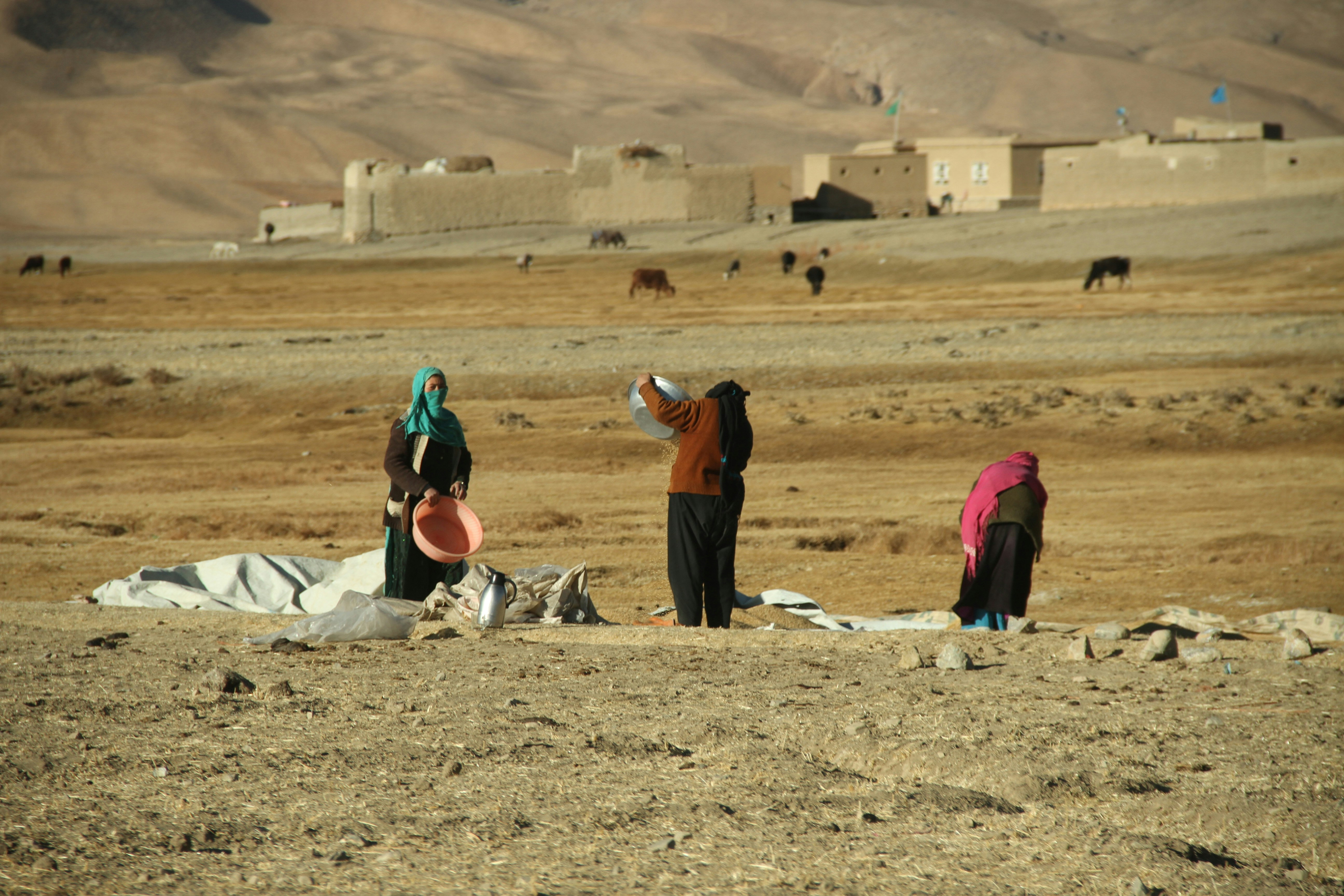
I was the quality assurance and learning reviewer of programme evaluations of two DfID programmes with a public health and behavioural science orientation, Violence Against Women and Girls Prevention and Response Programme, Malawi, and Prevention of Violence Against Women and Girls in Afghanistan. Fine tooth-combing through these evaluations, I was able to review and advise on applications of social, cultural and religious norm shifting theories by theorists such as Bicchieri, Denny and Mackie. I learned more about the application of theory-based public health behaviour change and legal interventions to try to dissuade the perpetrators and encourage the survivors to report it. These multi-level interventions targeted the male perpetrators, women survivors, patriarchal hierarchies of community and religious leadership (custodians of traditional gender norms and gatekeepers to norm change), the volatile community cultural environment where norms are reproduced, and Institutional architects and practitioners running the interventions. I applied my broad knowledge of public health and social research ethics, gender equality, disability and social inclusion practices, and non-verbal, creative and art-based communication methods to strengthen these programme’s delivery practices. I was personally thanked by the programme lead of the Afghanistan programme for ‘getting’ the layers of the operational context so clearly.
Development of My Approach to Applied Psychosocial Research
My interdisciplinary approach to psychosocial research evolved through my early projects. For a research project for the Samaritans on isolation and loneliness as risk factors for suicidal ideation and suicide among lone workers in the Scottish highlands, I advised the researcher on research ethics protocol, and methodological strategies sensitive to interviewees’ mental states. I combined the epidemiological/medical ethics I learned through my MPH with the anthropological ethics I learned as a PhD student. I was co-author of a book chapter on urban design and social flourishing (well-being) with my colleague Dr Jamie Anderson, who introduced me to neuropsychological approaches to mental flourishing and dual (hedonic/eudaimonic) approaches to subjective well-being. Engaging with Jamie’s work and conducting a sister study with my colleague Dr Patrick Rawstorne on measuring social flourishing among disenfranchised people involved in urban upgrading projects in the English city of Stoke-on-Trent in collaboration with the city’s public health department, I blended social epidemiology constructs and measurement scale items with psychometric well-being scales.
My early work looked at how community-level sociological concepts, social capital (social networks/collective collaboration/social bonds/sense of belonging) and social cohesion (positive and constructive relationships between people from different backgrounds) are linked with individual-level psychosocial constructs that express the ways that people experience grounding and connection with their place of residence and socio-residential communities. These included environmental psychology constructs: sense of place, sense of community, and emotional ones, such as place and community attachment and belonging. I used this relationship to explain how environmental change that alters social capital and cohesion in local areas can impact individuals when it affects how they relate and interact with the places and people among whom they live, work and play. This can subsequently impact psychosocial well-being outcomes.
I applied this approach my first book on how urban design and development of public spaces, housing and transport stops/hubs can help communities develop the social strengths and resources needed for community social resilience to withstand the adverse effects of climate change. I also applied in as a researcher-practitioner on the health impact assessment (HIA) of the UK governments’ proposed High Speed 2 (HS2) railway line (Northern section) (done with Atkins civil engineers), in a community survey and workshop for the HIA for a proposed nuclear power station (Wylfa B) on Anglesey Island, North Wales, and in a health advisory document for the UK government on the mental health effects of living near a proposed nuclear waste disposal site (done with Ben Cave Associates). I published two academic articles, one on my psychosocial model for measuring the psychosocial effects of environmental change resulting from industrial development, and another on a methodology for applying it to measure these effects, with the co-authorship of Dr Patrick Rawstorne and Ben Cave.
Post-Doc and PhD
My interdisciplinary Postdoc (see here) gave me a thorough grounding in how urban communities and vulnerable and/or marginalised groups are impacted by climate change, build socially sustainable communities and develop social resilience when experiencing adverse environmental and climatic events and changes; and the social resources (social capital/social cohesion/equity) required to ensure that resilience is continuously replenished. My DPhil (PhD) (see here) equipped me with deep understanding of how communities, cultures, ethnic groups, national, ethnic, racial and religious identities, belonging and attachments to communities and places work, alongside social and cultural processes of community and nation/nationalism formation, the mental envisioning of transnational migration networks, diasporas, nationalism and multicultural societies.
My D.Phil (PhD) was supervised by the late Professor Marcus Banks and Dr Robert Parkin. I received additional supervision from world leading Sociologist, Professor Anthony Heath, at the University of Oxford‘s Department of Sociology, and pursued deep emersion in Social Psychology theories of experiential knowledge, place attachment, nationalism, and conversational analysis methodologies. During my Masters of Public Health (MPH) at the University of New South Wales, Australia, I developed a writing partnership with Clinical Psychologist and Behavioural Epidemiologist, Dr Patrick Rawstorne and developed enough knowledge of Social and Behavioural Epidemiology to run a short study [see xxx].
I am a true ‘people person’ in every sense. I am also a world-class communicator, relating in the same kind and empathetic way to people at all levels, having started my career as a Social Affairs and Disability Trainee Researcher and Reporter on BBC Radio 4 making content investigating consumer and disability affairs on programmes ‘In Touch‘ and ‘You and Yours‘, and later as a freelance generalist reporter on BBC World Service.

Applied Consultancy Projects & Academic Research
I have conducted applied research (formative research, position papers, systematic literature reviews/meta-analyses, M&E) for consultancy projects, and in-depth academic research on:
- Outdoor and indoor air pollution exposures and migrants’ perceptions and behavioural responses
- The psychological motivations and drivers of pro-environmental behaviour (energy generation, domestic energy consumption, energy efficiency and home insulation, ecoableism and active travel policies)
- Community social resilience to climate change, and social sustainability
- Anxiety and psychosocial health and wellbeing in response to actual or anticipated changes in the built and biophysical environments
- Gender equality, and women’s role in dengue prevention through environmental management
- Urban design and development
- Social capital and social cohesion
- Community-based co-design and participatory urban design and development
- Psychosocial health and mental and social well-being/flourishing
- Health and social impact assessments (HIA, SIA)
- Population health and health services in Russia
- Cancer care in Post-Soviet and CIS countries
- Community responses to nuclear power station and nuclear waste disposal
- The formation of national and ethnic identities (ethnicity) and attachments to communities, places and disaporas among migrants and descendents of migrants as well as the ethnic majority in a multi-ethnic and multi-racial urban environment
- Uses of information and communications technologies (ICTs) and social media in international development (ITC4D) and low-to-middle-income countries